Hello, thanks for looking in!
Here is my Teach Poetry tip 5:
Do a Wordy Warm-Up
Stretch language through fun brainstorming challenges before embarking on poetry proper with your class. This is best with a given theme – also relevant to your poetry-writing plans.
Lead by example
Set an example by using rich, expressive language yourself. Taking Windy Day as an example theme here, you might refer – just casually, in passing – to breezes, gusts, blusters, gales, hurricanes and typhoons – perhaps cool breezes, nagging gusts, grumpy blusters, wild gales that push and pull, howling hurricanes and roaring, thrashing typhoons.
Fun
But I mentioned fun, so let’s have it! Don’t just ask how the wind blows or what it sounds or feels like: ask those questions while being the wind and leading a windy day action drama. Keep the prompts coming (it’s a good idea to have some up ready, up your sleeve), cheering on the children’s contributions even as you move on to new types of word – personified ones perhaps: gentle, gently caressing, soothing and hushing, mournfully whimpering, impatient, angrily roaring; then action verbs: hushing, sweeping, swirling, lunging, snatching, shaking – the children will be enthralled and their language ever more daring and powerful.
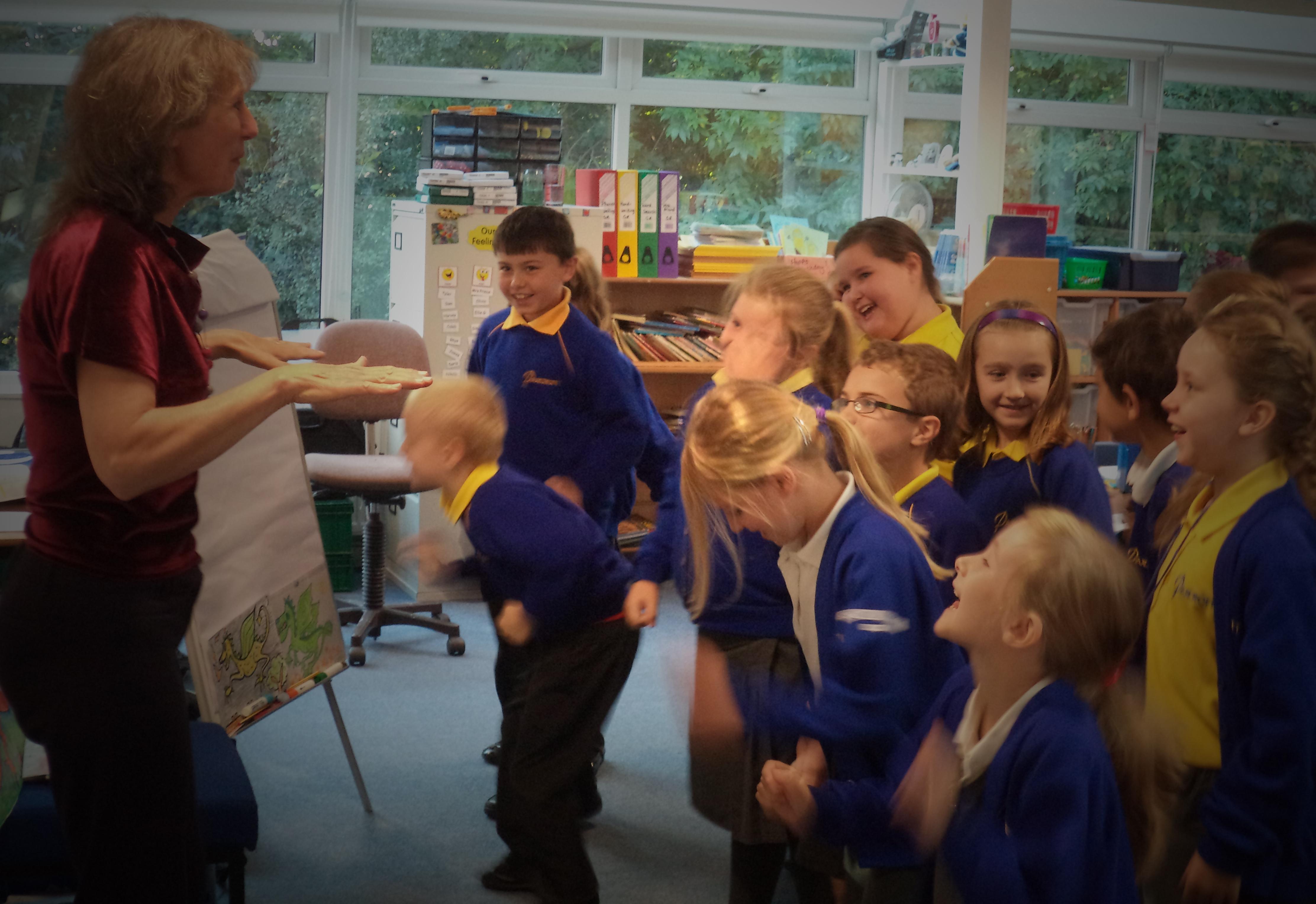
In the photo above, we (a Year 3 class) and I are being DRAGONS – all sorts, sneaking, creeping, lurking, pouncing, prancing, gobbling, blasting, flying, dancing – disco-dancing crazily, sneaking slyly, like a stalking tiger in the jungle, pouncing with the power of a jaguar, gobbling like a greedy giant, blasting like an erupting volcano, soaring through the twilight…
Fun can also be had by means of jotting challenges. Ask children to list a few describing words for your theme, then, after just a couple of minutes, call for examples, keeping everyone on their toes. Now change your request to verbs or similes and invite others to read out – or everyone to contribute one word. If they’re ready for more, build on this work, prompting for other linguistic aspects – alliteration, say (which words begin with the same letter?), or rhyming words (whirling, swirling? Shimmering, quivering?). Allow a few minutes for illustrative artwork to double up the fun before you move onto actual poetry-writing.
Now your class is ready for poetry!
Kate
By the way, I’m taking bookings now for Poetry Workshops next term – Spring 2025, with exciting theme choices: ANIMALS – with my new book, out January, Squeak! Squawk! Roar!, DRAGONS, SPACE, WINDY DAY, OR WILD WOODS.
Picture refers to my ANIMALS with book theme. Others available too, as listed.

 Kate Williams
Leave a comment